
Chapter One · Place du Casino
Casino de Monte-Carlo
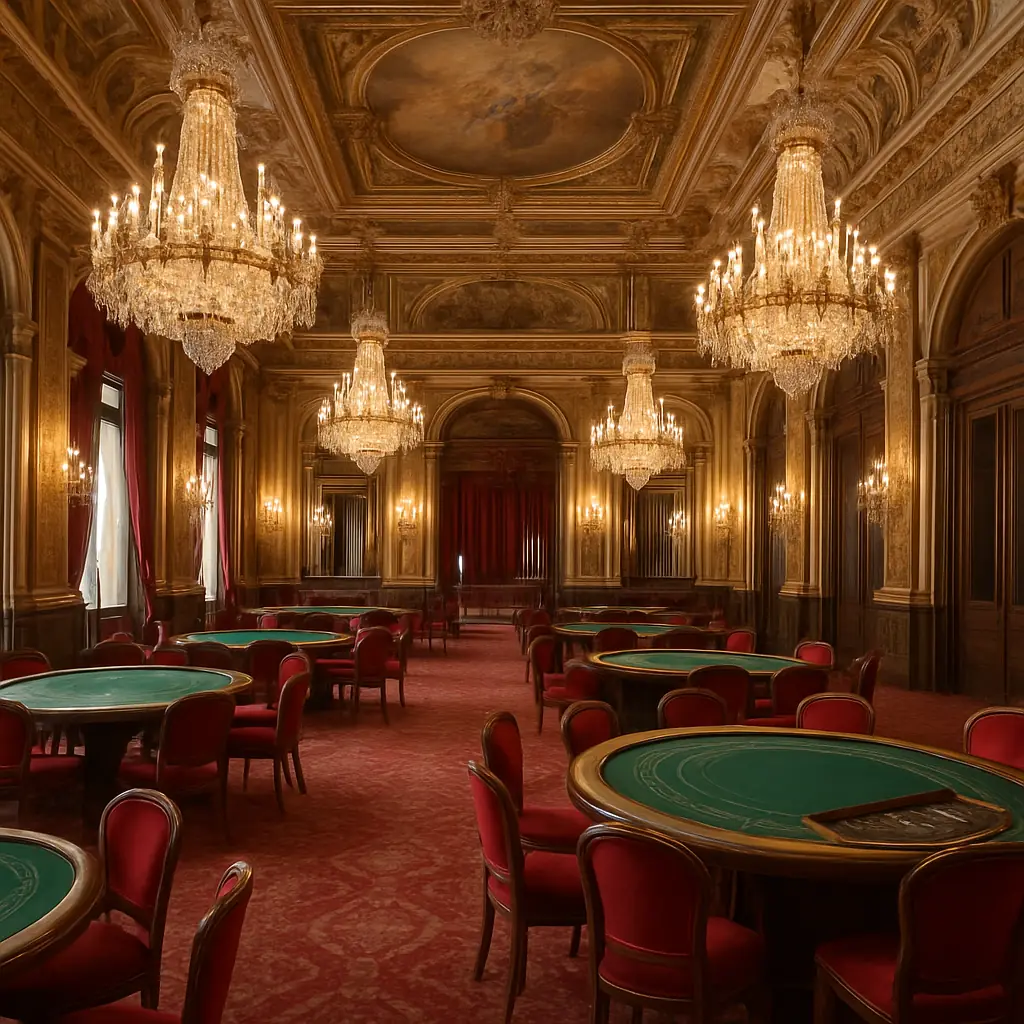
Europe's most photographed gaming hall is, above all, an architectural monument — a study in opulence, proportion, and the social theatre of the Belle Époque.
A Building That Built a City
Opened in 1863 under the direction of François Blanc, the Casino de Monte-Carlo was conceived not merely as a venue for games of chance but as the anchor of an entire resort economy. Charles Garnier — architect of the Paris Opéra — lent his name and influence to the project, ensuring that the building would rival the grandest theatres of the continent.
The result is a composite of styles: neo-baroque façades, rococo interiors, and a sequence of salons that unfold like rooms in a royal palace. Marble, onyx, gilt bronze, and frescoed ceilings create an atmosphere of deliberate spectacle.
Salons & Sequence
Visitors enter through the Atrium, pass into the Salle Europe with its allegorical ceiling paintings, and may continue to the Salle Amériques, the Salle Médecin, and the private salons reserved for members. Each room possesses distinct decorative programmes — arabesques, medallions, and mirrored panels that multiply light and space.
sablecontext documents these interiors as works of applied art. We describe the craftsmanship, the artists, and the historical patrons who shaped the building's evolution across three centuries.
- Opened 1863 (current building phases through 1910)
- Architect Charles Garnier (consulting); Jules Dutrou and others
- Style Belle Époque, neo-baroque, rococo revival
- Location Place du Casino, Monte-Carlo, Monaco
- Adjacent Hôtel de Paris, Café de Paris, Opéra de Monte-Carlo
- Heritage Part of the Société des Bains de Mer ensemble
Cultural Context
How the casino shaped Monte-Carlo's identity as a destination.
Before the casino, Monaco was a modest principality with limited resources. Blanc's vision transformed the rocky headland into a winter retreat for European aristocracy. The building's success funded roads, gardens, a railway connection, and the Hôtel de Paris itself.
Writers, composers, and artists gravitated to the square. Diaghilev, Colette, and countless others found inspiration in the interplay of glamour and Mediterranean light. The casino became a stage — not only for games but for fashion, conversation, and the performance of social identity.
Today, the building operates under strict regulatory oversight within the Principality of Monaco. Entry policies require appropriate dress and valid identification. Photography is restricted in many areas to preserve the experience of present visitors.
For architectural tourists, guided tours occasionally offer access to areas normally closed to the public. The Opéra de Monte-Carlo, sharing a wall with the casino, provides an alternative cultural entry point to the same building complex.
The Casino de Monte-Carlo is a theatre where the set never changes — only the audience.